Everything you need to know about week 39 of pregnancy

The 39th week of pregnancy is a time of intense anticipation for many expectant parents. It could happen at any moment now. Your everyday life is shaped by waiting, consciously tuning into your body and observing small changes. Many thoughts revolve around the birth, the right moment and how to manage your energy well.
At the same time, you can remind yourself of how much your body has already achieved. Your little one is very well developed and is actively preparing for life outside your womb. Even if uncertainty or impatience arise, your body is carrying you step by step through this final phase.
In this article, you will find all the important information about your baby’s development, the changes in your body and helpful tips for the 39th week of pregnancy.
Your baby in the 39th week of pregnancy:
- Size and weight: Your baby is now around 50 centimetres long, weighs approximately 3.4 kilograms and is about the size of a pumpkin. If the birth takes a little longer, your little one will build up further fat reserves. These create the typical, round baby cheeks.
- Breathing and lungs: Your baby is already breathing regularly, at around 40 breaths per minute. This breathing rhythm will continue after birth. In addition, the body produces more cortisone and other stress hormones. These help your baby to function independently of the placenta after birth.
- Senses and perception: The eyes are almost as large as an adult’s, but can only see clearly at a distance of around 20 to 30 centimetres. This is exactly the distance when breastfeeding or carrying your baby. Sounds and voices continue to be clearly perceived.
- Digestion and meconium: The black-green meconium, also known as the first stool, is collecting in the intestines. It is passed during the first few days after birth and is a sign that the digestive system is working.
- Movements: Your baby’s movements may now often feel noticeably weaker or less frequent. The uterus offers very little space. However, if you do not feel any movements for a longer period of time, please contact your midwife or doctor.
Your body in the 39th week of pregnancy:
- Contractions and the start of labour. Stronger settling and practice contractions may occur now as the cervix slowly begins to open. Labour contractions usually begin around 20 minutes apart and then gradually become more frequent, more intense and longer. They initiate the birth. If you are unsure whether you are experiencing labour contractions, contact your midwife or doctor.
- Pressure and pain. As your baby moves further down, you will often feel strong pressure in your lower abdomen and pelvic area. Back pain may increase as the spine and nerves are placed under greater strain.
- Tingling and sensory disturbances. Some expectant parents notice tingling or a pins-and-needles sensation in their legs. This is usually caused by pressure on the nerve pathways in the pelvic area.
- Sleep problems and exhaustion. Restless nights, frequent waking and tiredness are part of this phase for many people. Short periods of rest during the day can help you gather your strength.
- Itching and skin tightness. The tightly stretched skin on your stomach may itch. Regular skincare with an emollient cream can provide relief.
Towards the end of pregnancy, many expectant parents feel exhausted and wonder how they will manage the birth. This is completely normal. What matters now is consciously conserving your energy and taking good care of your body.
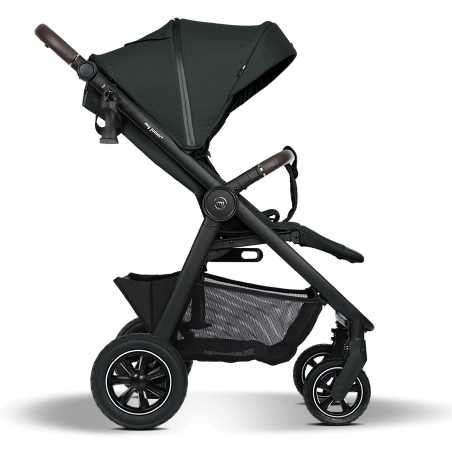
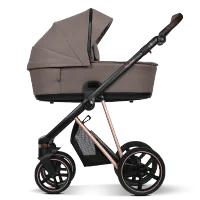
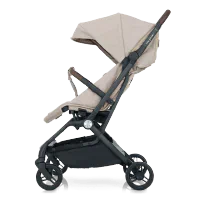
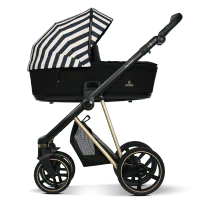
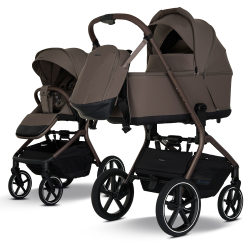
Are you still looking for your dream pram?
Here you can find our bestsellers
Your baby’s development in the 39th week of pregnancy
Your baby is now fully prepared for life outside your womb. Breathing, digestion and metabolism are functioning independently. At the same time, the brain and nervous system continue to develop, even though the biggest developmental steps have already been completed.
Many babies are now firmly in a head-down position in the pelvis. Because space is limited, movements are more likely to be small and powerful rather than sweeping. Your little one is gathering strength for the moment of arrival.
Even though the exact timing of the birth cannot be planned, your body and your baby are working closely together. Everything is geared towards you meeting each other soon.
Your body in the 39th week of pregnancy
Waiting now takes up a large part of everyday life. First-time mothers in particular often worry about their waters breaking unexpectedly. In practice, however, the waters break prematurely in only around 15 per cent of births. Even if your waters do break, several hours may still pass before the first contractions begin. So there is usually enough time to inform your midwife and the hospital.
During this phase, make sure you eat regular, carbohydrate-rich meals. They help keep your blood sugar levels stable and preserve your energy reserves for the birth.
Tips for the 39th week of pregnancy
- 💡 1. Pay close attention to your contractions
Regular contractions that become stronger and occur around five minutes apart are a typical sign that labour has begun. - 💡 2. Conserve your energy
Make sure you get plenty of rest and sleep. Your body is preparing for a major effort. - 💡 3. Relieve discomfort in your hands and feet
Pain or numbness in your hands can be caused by water retention. Cold or lukewarm water rinses may provide temporary relief. The symptoms usually disappear within a few weeks after the birth. - 💡 4. Look after your skin
Creams or oils can help relieve itching caused by stretched skin. - 💡 5. Prepare practically
Taking a practice drive to the hospital can give you peace of mind. Check the route, possible traffic conditions and parking options so that you feel more relaxed when the time comes.
The 39th week of pregnancy is a time of anticipation, trust and consciously embracing the moment. You can take your time, listen to your body and trust that you are both ready.
Frequently asked questions about the 39th week of pregnancy
How big is my little one at 39 weeks of pregnancy?
At 39 weeks of pregnancy, your little one has reached approximately the size of a pumpkin. They now have hardly any lanugo hair left, and the protective vernix caseosa has almost completely disappeared too. Your baby bump is now stretched taut, while your baby waits in the womb for the right moment to finally enter the world.
Which symptoms are typical for a mother shortly before giving birth?
Many pregnant women now suffer from increased pregnancy symptoms such as back pain, a tense abdominal wall or uncomfortable pressure on the stomach. There is no need to worry if you notice a little nausea or even diarrhoea now, as your body often naturally cleanses itself before delivery. Even if your bump is considerable, always keep your eyes on your goal.
How do I know that the countdown to my due date has begun?
True signs that your due date is approaching are regular contractions that become stronger over time and do not subside. While lightening contractions push your baby's head deeper into the birth canal, practice contractions can occur days before the actual due date. Also look out for your waters breaking, as this is a clear indication that delivery is imminent.
How do I prepare for a caesarean section or a natural delivery?
Whether a vaginal delivery or a planned caesarean section lies ahead, your mental attitude is crucial. Review your birth plan and make sure that nothing is left to do for the first few days after you return home. There is no reason to put yourself under pressure because of the way you give birth, as in the end, all that matters is that you will soon be holding your little miracle in your arms and can fully enjoy this first moment of happiness.
What can my little miracle and I expect in the period after the birth?
As soon as you finally hold your little one in your arms, everything else will become secondary. There is nothing more beautiful than enjoying this first moment of peace when the countdown finally ends and you get to know your baby.
Your world full of benefits.
More protection. More service. More joy.
- 10-year warranty & mobility guarantee
- 1 year of fully comprehensive cover
- Personalised service
- Mom To Be Academy Online Courses
- Early Access for launches
- Upgrades with our hotel partners
Pushchairs
MAVI
MAVI Bundle
VIGO 2
VITA unique 3
VIGO 2 Alcantara
VIGO
VITA HOPE
LIYO Stroller
PICO 3 with tub
NOAX 2
MIYO 2
Pram tests
Consultation
Buggies
LIYO
LIYO Bundle
PICO 3
PLIA 2
PLIA 2 Air
PICO 360
PICO 3 with tub
PICO tub
PICO infant car seat adapter
Limited Editions
Limited Edition Baby Carrier
Child seats
All Isofix Bases
ELYO
AURA ergo 2
AURA ergo
Beam
Cyro 360
Base 360
Capsule System Bundle
Beam Bundle
Avionaut Cosmo
Reviews
Read reviews
Write a review
Home
Fabric samples
Baby carriers
All baby carriers
LUVA
NAMI
NAMI with ring
Accessories
Vouchers
Discover my junior
About us
In your vicinity
All my junior stores
Flagship Store Aachen
Flagship Store Hamburg
Flagship Store Krefeld
Studio Heilbronn
Studio Cologne
Studio Trier
Studio Braunschweig
Studio Metzingen
Studio Binzen
my junior prams in Switzerland
Studio Senden
Studio Vienna
Studio Mülheim-Kärlich
Help and Contact
Useful
Career
Press