Everything you need to know about week 38 of pregnancy

The 38th week of pregnancy feels like an inner arrival for many expectant parents. Physically and emotionally, you are usually more than ready for the birth. Especially in a first pregnancy, your baby often needs a little more time. For around another week, your baby is ideally protected in your womb to complete the final stages of development and fully mature.

Your everyday life becomes calmer, and your focus is clearly on yourself, your body and the imminent moment when you will meet your baby. Many thoughts revolve around trust, letting go and following your own rhythm. This week represents patience, preparation and the deep knowledge that everything is allowed to happen at the right time.

Your baby is also now very well developed. It is gathering strength, building up the last fat reserves and practising everything it needs for life outside your womb. In this article, you will find all the important information about your baby’s development, the changes in your body and helpful tips for the 38th week of pregnancy.

Your baby in the 38th week of pregnancy:

  • Size and weight: Your baby is now around 49 centimetres long and weighs approximately 3.1 kilograms. It has continued to gain weight in recent weeks and is becoming increasingly strong and sturdy. At its current size, it can be compared to a butternut squash.

  • Clinical maturity and further development: Your baby is already considered clinically mature. Nevertheless, important final refinements are still taking place this week. Especially during a first pregnancy, your baby still benefits from a few more days in your womb.

  • Bone development and calcium: Your baby continues to receive calcium from you. This causes the bones to harden, beginning with the arms and legs. This process is called ossification and is an important step towards stability and mobility after birth.

  • Everyday activity in the womb: Your baby drinks amniotic fluid, passes it out again, sleeps a lot and is active from time to time. These activities train digestion, kidney function and breathing movements, preparing your baby ideally for life outside your womb.

  • Fat reserves and preparation for meeting you: During the final weeks of pregnancy, your baby builds up additional fat reserves. These help it maintain its body temperature after birth. Your baby is almost ready to meet you.

Your body in the 38th week of pregnancy:

  • Uterus and shape of your bump. Your bump has usually reached its maximum size. Because your baby is lying low, your body shape remains altered. Many expectant parents find this phase challenging, but also very mindful.

  • Downward pressure. Pressure in your lower abdomen continues to increase. Your baby is lying deep in your pelvis, which can cause a strong feeling of heaviness. At the same time, breathing often becomes easier because there is less pressure on your diaphragm.

  • Increasing tiredness. Your body is working hard behind the scenes. Many people feel tired more quickly, exhausted or less able to cope. Periods of rest are especially valuable now.

  • Practice contractions and dropping contractions. Practice contractions, pre-labour contractions and dropping contractions are common this week. They help your body continue preparing for the birth, although they do not necessarily indicate that labour has begun.

  • Changes in the pelvic floor. Because your baby is lying low, your pelvic floor is under considerable strain. A frequent urge to urinate or slight urine leakage when sneezing, coughing or laughing is not unusual at this stage.

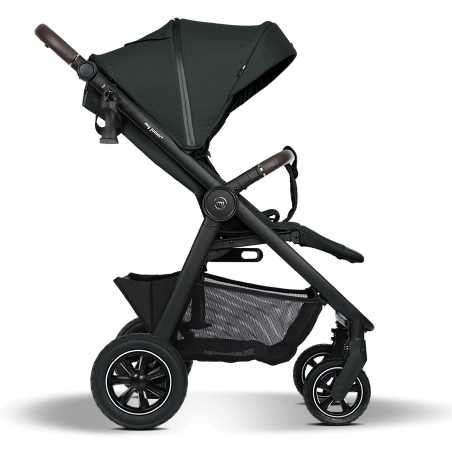
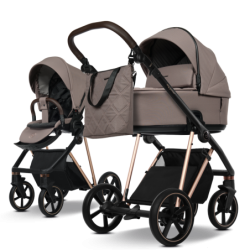
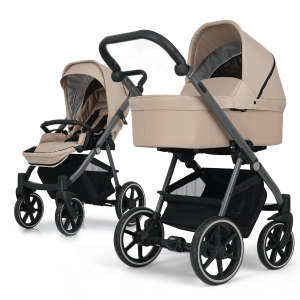
Are you still looking for your dream pram?

Here you can find our bestsellers

Your baby’s development in the 38th week of pregnancy

This week, your baby is mainly using its time to continue building up fat reserves and fine-tuning its organs. Digestion is working, the kidneys are functioning independently and the immune system is continuing to develop.

Many babies are now firmly positioned head down in the pelvis. Movements feel strong, but less expansive. Instead of rolls or kicks, you are more likely to feel distinct pushing or pressure. Many expectant parents experience this closeness as very intense.

Your little one continues to practise all the things it will need after birth. Sleeping, drinking, swallowing and breathing are becoming increasingly secure. Even though the exact timing cannot be planned, your baby is making targeted preparations for its arrival.


Your body in the 38th week of pregnancy

Especially during a first pregnancy, it can be difficult to tell whether labour has already begun. As the cervix slowly opens, the mucus plug that has kept your uterus closed during pregnancy often comes away. This discharge usually appears brownish or reddish. This is sometimes referred to as the baby “showing”.

Labour often begins no later than one or two days after the mucus plug has come away. Once labour has actually begun, the contractions become more regular, stronger and longer. The intervals between them become shorter. Contractions usually begin in the upper abdomen and move downwards. This makes the cervix soft and allows it to open step by step.

Typical symptoms may also occur. These include itching caused by the skin on your abdomen being stretched considerably, increasing water retention in your legs or feet, and a stabbing sensation in the vagina caused by your baby’s low-lying head. A pronounced nesting instinct is also completely typical during this phase. Many people feel a strong desire to prepare everything for the baby.

Antenatal care in the 38th week of pregnancy

Even at what may be your final antenatal check-up, your uterus will be examined, your blood pressure measured, your urine checked and your baby’s heartbeat monitored. These examinations are designed to continue providing good care for you and your little one.


Tips for the 38th week of pregnancy

  • 💡 1. Continue strengthening your pelvic floor
    Gentle exercises can help you maintain stability and prepare for birth and postnatal recovery.

    Basic exercise: Lie on your back with your legs bent and your feet flat on the floor. Let your arms rest comfortably beside your body. Imagine bringing your pubic bone and tailbone towards each other, tighten the muscles, hold for five seconds and then release. Repeat the exercise about 15 times.

    Bridges for greater stability: Lie on your back with your feet flat on the floor and lift your pelvis and upper body until your upper body and thighs form a straight line. Tense your abdominal and pelvic floor muscles, hold the position for about 10 seconds and slowly release. Repeat the exercise about three times.

    Cat stretch for relief: Get onto all fours, with your legs hip-width apart and your arms shoulder-width apart. Alternately arch your back upwards and downwards, activating your abdominal and pelvic floor muscles as you do so. Repeat the movement about 10 times.

  • 💡 2. Drink enough and take care of yourself

    Drinking plenty of fluids can help ease water retention. Listen to your body and take breaks whenever you need them.

  • 💡 3. Enjoy mindful time together
    This is the last period of time you will spend together without your baby. If you feel well, plan a quiet evening together, a conversation or a little moment just for the two of you.

  • 💡 4. Trust your body
    You have carried and supported your little one this far. Your body knows how to give birth. Let this trust carry you through the days ahead.

The 38th week of pregnancy stands for patience, closeness and the quiet knowledge that everything is ready. You can allow yourself to feel supported by your body and look ahead with confidence to what will soon begin.


EvoOne™
The bath that magically creates space.

Folds up with the frame and makes your everyday life magically easy. Compact, patented, revolutionary.

Frequently asked questions about the 38th week of pregnancy


Is my little one still considered premature this week?

At 38 weeks of pregnancy, your little one is medically considered fully developed. So it is no longer a premature birth or a premature baby if they now make their way into the world. The lungs are now fully mature and ready for that very first breath outside the womb.

Which pregnancy symptoms are normal during the final stretch?

At the end of this month of pregnancy, you as a mum will clearly feel the intense final stretch. Your large baby bump often leads to pregnancy symptoms such as back pain, while deep sleep also becomes less frequent due to the limited space. In this joyful moment of anticipation, your body is naturally preparing for the birth that is soon to come.

How does the baby change shortly before birth?

Your baby’s skin is now smooth and rosy, as the protective vernix has almost completely disappeared. Their body weight and general weight gain are now slowly stabilising, while the first meconium accumulates in the intestines. There is hardly any room left for strong movements, but every slightly more noticeable push shows you how close your due date already is.

Which signs indicate that the baby will soon enter the birth canal?

Shortly before the birth, your doctor or midwife will regularly check whether the baby is in the optimal position for birth. Clear signs such as lightening contractions prepare the way for entry into the birth canal, while the cervix also slowly changes. It is best to check your checklist for the maternity unit or birth centre once more, so that you do not feel stressed on the big day.

Your world full of benefits.

More protection. More service. More joy.

  • 10-year warranty & mobility guarantee
  • 1 year of fully comprehensive cover
  • Personalised service
  • Mom To Be Academy Online Courses
  • Early Access for launches
  • Upgrades with our hotel partners