Childproofing the flat:
Welcome to the adventure of parenthood: full of love, laughter and… pitfalls. As soon as your little one becomes mobile, your home turns into a journey of discovery, but unfortunately also a potential danger zone. Don’t worry: with a few well-considered measures, you can transform your home into a safe and cosy haven. From the living room to the balcony, we’ll show you how to avoid typical risks and childproof your home without turning everything upside down.
In this guide, you’ll learn:
- When it’s best to start securing your home
- Which sources of danger are often overlooked in everyday life
- How to childproof every room – step by step
- Which solutions are available for rented homes, with no drilling required
- And: which safety gates are suitable for each situation
With practical tips, expert knowledge and an extra dose of calm, we’ll accompany you on your journey towards a safe home.
When is the right time? (When should we start?)
The motto is: better safe than sorry. At the latest when your baby starts crawling (from around 6 months), you should start making your home safe. However, it is also worth looking out for potential sources of danger beforehand, as many babies become mobile sooner than expected. So a good time to start planning is around the age of 4 months. This way, you can stay relaxed and well prepared.
The main sources of danger at a glance
Babies are driven by curiosity, but they do not yet have a sense of danger. That is why it is important to identify potential risks before things become dangerous.
Common causes of accidents in the home include:
- Falls: from the changing table, sofa or stairs
- Burns: from hot hobs, batteries, kettles or tea
- Poisoning: from cleaning products, medicines or poisonous plants
- Electric shocks: from unsecured sockets or loose cables
- Trapping injuries: from doors, drawers or windows
- Risk of suffocation: from small parts, plastic bags or loose cushions
Room by room: How to make your home safe
Living room & technology: anti-tip protection and cables
The living room is often the main playground. That makes it all the more important that everything is firmly secured. Televisions and shelving should be attached to the wall with anti-tip restraints. Cables from lamps or electrical devices should be kept in cable ducts or special protective boxes. You should fit sockets with childproof covers: ideally ones that can only be opened with both hands. Protect glass tables and sharp corners with rubber or silicone corner guards.
Please also bear in mind: Many houseplants are poisonous to babies and toddlers.
The danger does not always come from eating them: depending on the plant, leaves, flowers, fruit, sap, or even roots and tubers may contain toxic substances. Some plants cause irritation simply through skin contact, while others only become a problem when your child puts them in their mouth or simply rubs their face or lips after touching them.
Tip: Check whether each plant in your living room is safe and replace potentially dangerous species with non-toxic alternatives, so your home can remain green and cosy. Not sure which plants you have? With an iPhone (or a plant identification app), you can simply take a photo and identify the plant species. This will quickly help you find out whether you have a potentially dangerous species at home and, if necessary, choose child-safe alternatives.
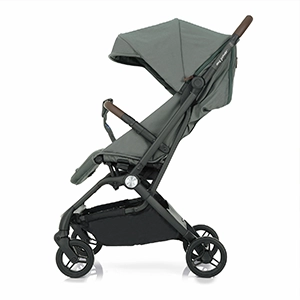
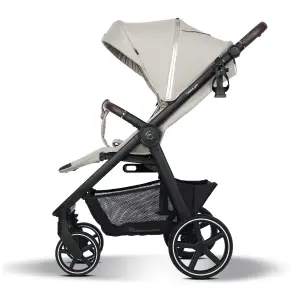
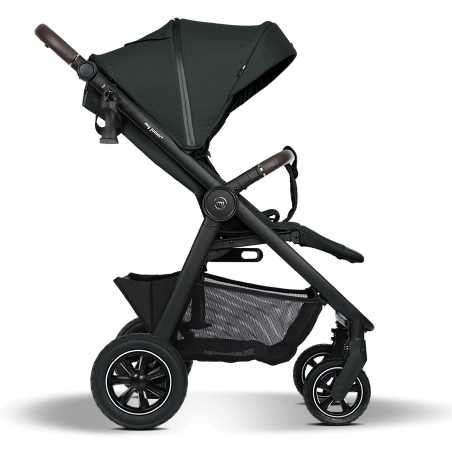
Are you still looking for your dream pram?
Here you can find our bestsellers
The kitchen: cooker, knives and cleaning products
The kitchen is full of hazards. So: only enter under supervision. Use hob guards to prevent little hands from reaching hot hobs or pans. Knives and sharp objects belong in upper drawers fitted with child safety locks. It’s best to store cleaning products and dishwasher tablets in a lockable cupboard. Practical: many cupboard and drawer locks work without drilling.
Stairs & corridors: Prevent falls
Stair gates are among the most important purchases for toddlers who are becoming mobile: at the top AND bottom of the stairs. Make sure they are securely fitted and have a childproof lock. Slippery carpets or loose runners should also either be made non-slip or removed. Tip: Door stoppers protect little fingers from getting trapped, including in hallways.
Children’s room & sleeping area
In the nursery, furniture should be stable, so it is best secured to the wall. Avoid pillows, blankets or soft toys in the baby's cot to prevent the risk of suffocation. Choose breathable mattresses and secure windows with window locks. Sockets, corners and drawers should also be made child-safe. Make sure night lights are child-safe and, if necessary, use a bed guard as soon as your child begins to pull themselves up.
Bathroom & Balcony
Bathrooms pose many dangers: slippery tiles, cleaning products and medicines. Use non-slip mats, secure cupboards and make sure that access to the bathroom is protected where necessary by a safety gate or child lock. On the balcony, the rule is: Absolutely no climbing. Do not place furniture near the railings and, where necessary, secure the railing with a balcony safety net. Plants? Only use non-toxic varieties.
Special: Child Safety in Rented Accommodation (Without Drilling)
Drilling is often not allowed in rented accommodation, but there are clever alternatives. Many products such as cupboard and drawer locks, edge protectors or socket covers work with adhesive strips, magnets or suction cups. Safety gates with clamp fittings also do not require screws. Tip: Look for residue-free solutions that can be easily removed when you move out. This will save your nerves and your deposit.
Decision aid: Which grille for which purpose?
Door gate, stair gate, bed rail, hob guard… The choice is vast. But which gate do you need for what?
- Stair gate: For the top and bottom of the stairs. Screw-fit or pressure-fit models with a safety certificate are ideal.
- Door gate: For blocking off rooms such as the kitchen or bathroom. Flexible and often installable without drilling.
- Bed rail: For your child’s first proper bed or the family bed. Prevents your child from falling out at night.
- Hob guard: Protects cooking surfaces from inquisitive hands. Make sure you choose heat-resistant material.
What matters is this: Always look for tested safety (e.g. the GS mark), high-quality materials and child-friendly operation.
The my junior expert tip:
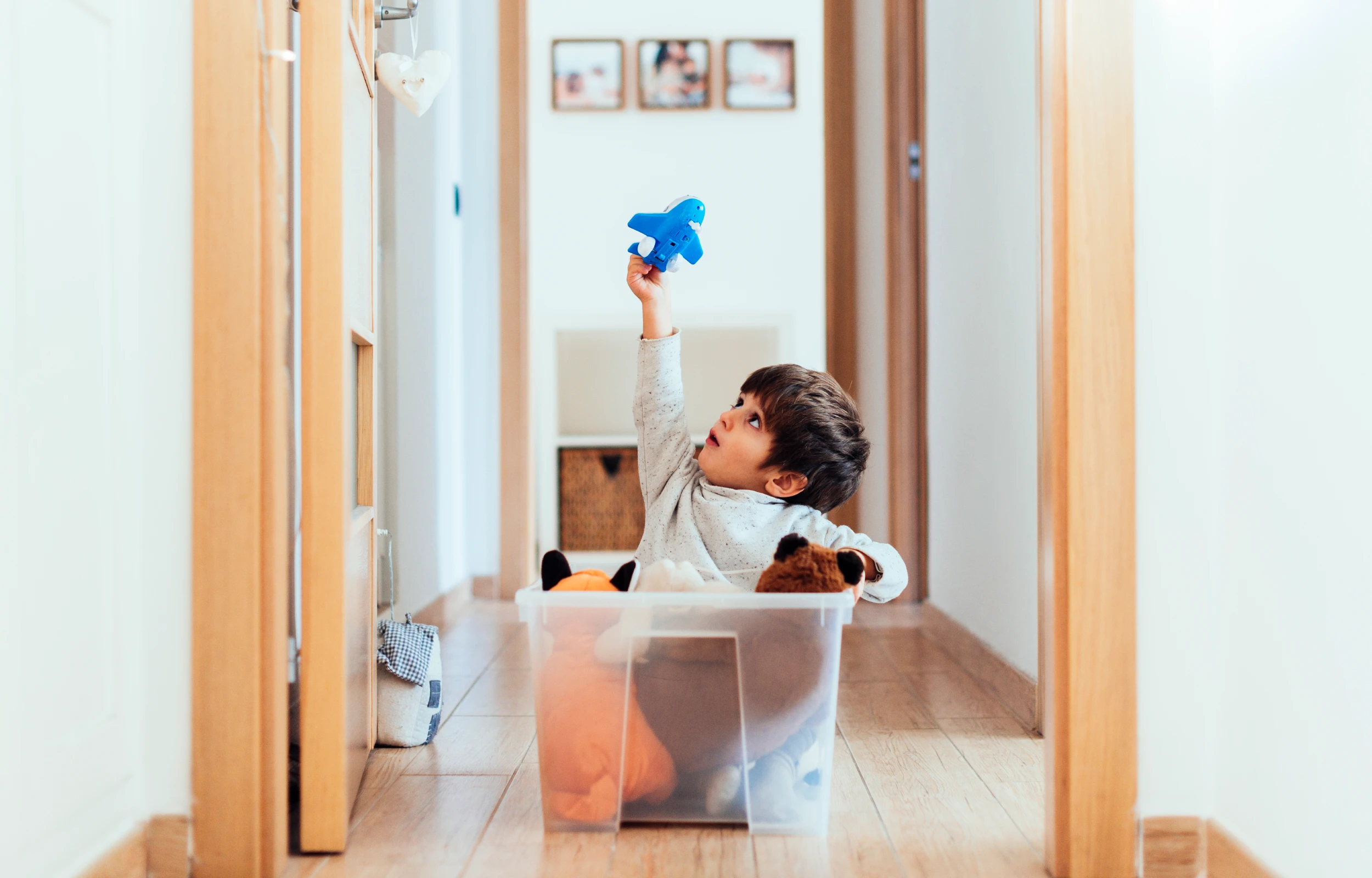
If you’re currently making your home childproof, it helps to walk through the rooms from your child’s perspective: literally at eye level. Crawl through your home and pay attention to what your baby can see, grasp and reach. You’ll be surprised by how many hazards suddenly become apparent. And the best part: you can take targeted action with little effort.
Important contacts & points of contact in an emergency
Despite taking every precaution, unfortunately, minor or more serious accidents can happen time and again. That’s why it’s good to be prepared. Save these important numbers in your phone and put them up somewhere clearly visible – for example, on the fridge. This way, you can react quickly in an emergency.
Emergency numbers for acute emergencies:
- 112 – Fire brigade & emergency medical services. For acute emergencies such as unconsciousness, difficulty breathing, serious injuries or poisoning. → The number works throughout Europe – free of charge & without an area code.
- 116 117 – Out-of-hours medical service. When your paediatrician is closed, but there is no acute emergency. → They will direct you to an emergency surgery or arrange a doctor’s home visit.
- Poison control centre. If you suspect poisoning caused by medicines, plants, cleaning products or similar. You can get immediate professional help here, around the clock.
Poison control helplines throughout Germany (central numbers):
- Berlin/Brandenburg: 030 19240
- North Rhine-Westphalia: 0228 19240
- Bavaria: 089 19240
- Baden-Württemberg: 0761 19240
- Other regions: Information at www.gizbonn.de
Other important contacts you should have to hand:
- 📞 Paediatrician: name, telephone number, address
- 🏥 Nearest children’s hospital / A&E: address & telephone number
- 💊 Pharmacy with an out-of-hours service: information is available at www.aponet.de
Tip:
Create a small emergency card with all the contacts and important information about your child (e.g. allergies, medicines) and keep it close at hand in the changing bag or on the pushchair. This will give you extra peace of mind when you’re out and about.
Frequently asked questions about childproofing your home
When should you start childproofing your home?
In your new life with your little one, safety plays a central role. It is best to start adapting your surroundings from around the fourth to sixth month. Before your little one reaches the age when they become mobile, you should put the first safety measures in place. Once children start crawling, many things quickly come within their reach. Paying attention early on to potential hazards in the bedroom or any other room will save you and your family unnecessary stress later. This way, you do not have to rush anything and can prepare your home at your own pace.
What are the biggest dangers for little explorers in the home?
The greatest risk of accidents often lurks where we least expect it. From the perspective of your little one, sockets, loose cables and electrical appliances are extremely exciting. Make sure that electricity and hot appliances always remain out of reach. Heavy furniture such as chests of drawers should be securely anchored so that they cannot tip over when your child pulls themselves up. Dangerous items such as cleaning products, glass and sweets that could be swallowed should be kept safely behind closed cupboard doors. On this page, we will help you childproof your home step by step, so that your shared moments of happiness remain undisturbed.
How do I childproof a rented home?
When you live in a rented home, you often do not want to leave any permanent marks. There are many solutions for every room that work without drilling. Stick-on socket covers, window-handle locks and table-edge protectors are effective ways to improve safety. Safety gates for the garden or stairs can also usually be fitted simply by clamping them in place. When buying, pay attention to quality, because the price of your child's safety is immeasurable. We offer you these tips without any additional commission, so that your little one can grow up safe and protected.
How safe is my child compared with being out in traffic?
While you automatically pay particular attention when out in traffic, invisible dangers often lurk indoors, right on the floor. Small objects can quickly become obstacles for little explorers. Make sure that your little one can move around freely by removing anything they could trip over. With the right aids, you can create an environment where you can sit back and relax, enjoying time with your loved ones.
Conclusion & your moment of happiness
A childproof home does not mean having to make everything perfect, but rather minimising the most important sources of danger with love and common sense. This allows you to give your child the freedom to discover the world safely. And you can relax while they are off on little adventures of discovery.
And perhaps it is precisely this moment, when you are sitting on your sofa, your child is playing and you know that everything is safely secured: your personal moment of happiness.
Your world full of benefits.
More protection. More service. More joy.
- 10-year warranty & mobility guarantee
- 1 year of fully comprehensive cover
- Personalised service
- Mom To Be Academy Online Courses
- Early Access for launches
- Upgrades with our hotel partners
Pushchairs
MAVI
MAVI Bundle
VIGO 2
VITA unique 3
VIGO 2 Alcantara
VIGO
VITA HOPE
LIYO Stroller
PICO 3 with tub
NOAX 2
MIYO 2
Pram tests
Consultation
Buggies
LIYO
LIYO Bundle
PICO 3
PLIA 2
PLIA 2 Air
PICO 360
PICO 3 with tub
PICO tub
PICO infant car seat adapter
Limited Editions
Limited Edition Baby Carrier
Child seats
All Isofix Bases
ELYO
AURA ergo 2
AURA ergo
Beam
Cyro 360
Base 360
Capsule System Bundle
Beam Bundle
Avionaut Cosmo
Reviews
Read reviews
Write a review
Home
Fabric samples
Baby carriers
All baby carriers
LUVA
NAMI
NAMI with ring
Accessories
Vouchers
Discover my junior
About us
In your vicinity
All my junior stores
Flagship Store Aachen
Flagship Store Hamburg
Flagship Store Krefeld
Studio Heilbronn
Studio Cologne
Studio Trier
Studio Braunschweig
Studio Metzingen
Studio Binzen
my junior prams in Switzerland
Studio Senden
Studio Vienna
Studio Mülheim-Kärlich
Help and Contact
Useful
Career
Press