Your cart
There are no more items in your cart
 Guide
Guide
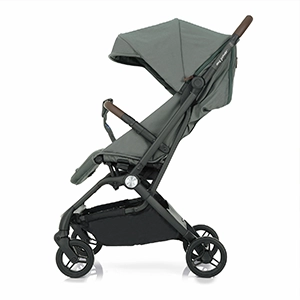
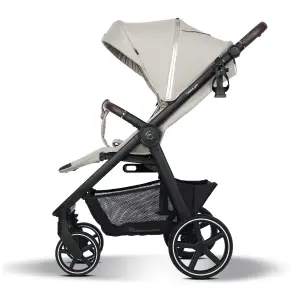
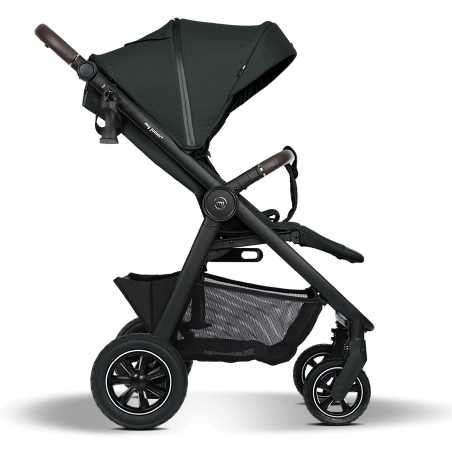
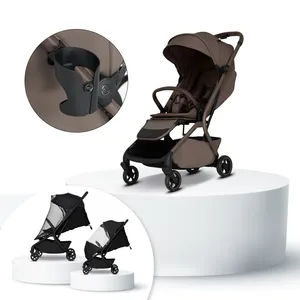
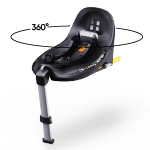
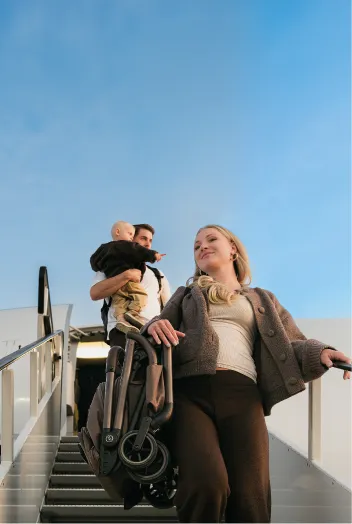




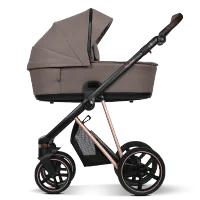
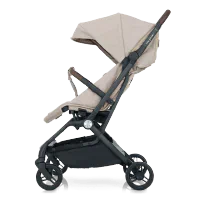

Cabin-size buggy: What exactly does that mean?
'Cabin Size', 'suitable for cabin travel', 'suitable as hand luggage' – parents constantly come across these terms when searching for a buggy. But what do they really mean? Which dimensions apply? And why does a buggy that calls itself 'Cabin Size' suddenly not fit in the hand luggage allowance of an airline?
This guide clears up the most common misunderstandings, provides the current size requirements of the most important airlines for 2026 – and shows which buggies actually meet these requirements.
Definition: What is a Cabin-Size Buggy?
A Cabin-Size buggy is a pushchair or buggy that complies with an airline's hand luggage dimensions when folded – and can therefore theoretically be taken into the aircraft cabin without having to be checked in at the gate.
Three things are crucial:
•Folded dimensions: The length × width × depth when folded must be within the airline's specified limits
•Weight: Many airlines also have weight limits for hand luggage (usually 6–12 kg)
•Airline rules: 'Cabin Size' is not a protected term – each airline defines its own dimensions
⚠️ Important: 'Cabin Size' is no guarantee
'Cabin Size' is not an official, protected term. Any manufacturer can use it – even if the buggy does not fit in your airline's hand luggage allowance. The decisive factors are always the specific folded dimensions in centimetres and a comparison with your particular airline's requirements before your flight.
What Cabin Size does not automatically mean is that you are guaranteed to be able to take the buggy on board. Airlines have the final say – even when the dimensions are technically correct. Factors such as fully booked overhead compartments, the subjective assessment of gate staff or differing fare rules may mean that the buggy still has to be checked in.
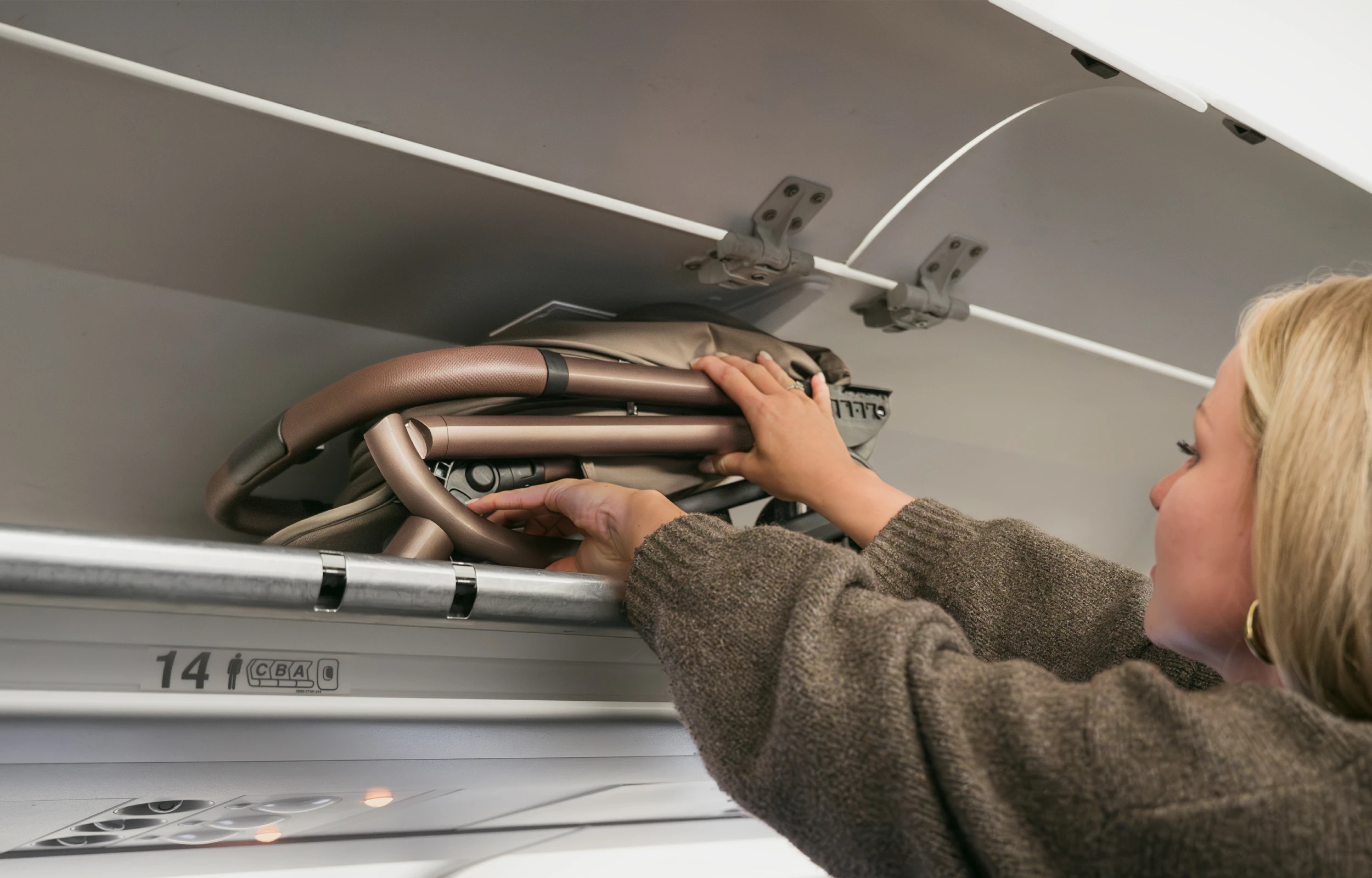
The only truly reliable confirmation that a buggy is suitable for the cabin is IATA approval – the official standard of the international trade association for airlines. The my junior LIYO is IATA-approved – worldwide, it is the only pushchair that is approved both as a buggy and with a mounted carrycot.
What dimensions apply to cabin-size buggies?
The IATA standard: The basis for all comparisons
The IATA (International Air Transport Association) recommends maximum hand luggage dimensions of 55 × 35 × 25 cm and a weight of up to 8 kg. However, this is only a recommendation – not a binding requirement. Airlines may differ from it, and many do.
The same applies to buggies as to suitcases: when folded, the dimensions must fall within the airline’s limits in all three dimensions. This sounds simple – but in practice there are significant differences between airlines.
The safe target range for most European airlines
If you want your buggy to be suitable for cabin travel with as many European airlines as possible, you should pay attention to the following guidelines:
| Dimension | Safe value | Standard value | Ryanair value |
|---|---|---|---|
| Length (longest side) | max. 55 cm | 55 cm | 55 cm |
| Width (middle side) | max. 40 cm | 40 cm | 40 cm |
| Depth (shortest side) | max. 20 cm | 23 cm | 20 cm |
| Weight | max. 8 kg | 8–12 kg | 10 kg (Priority) |
Rule of thumb: A buggy with folded dimensions of no more than 55 × 40 × 20 cm is suitable for the cabin on almost all European airlines – including the strict budget carriers. If you never fly with Ryanair or Wizz Air, you have a little more leeway with 55 × 40 × 23 cm.
Differences between airlines: where it really gets tight
The following table shows the current hand luggage requirements of the major European airlines for 2026. All information has been carefully researched – nevertheless, always check the current rules on your airline’s website immediately before travelling, as requirements can change at short notice.
| Airline | Max. L×W×D (cm) | Weight | Tariff notice | Buggies permitted | Strictness |
|---|---|---|---|---|---|
| Lufthansa | 55×40×23 | 8 kg | Economy & above | Yes, gate check | Medium |
| Swiss | 55×40×23 | 8 kg | Like Lufthansa Group | Yes, gate check | Medium |
| Austrian | 55×40×23 | 8 kg | Like Lufthansa Group | Yes, gate check | Medium |
| Eurowings | 55×40×23 | 8 kg | From the SMART fare | Yes, gate check | Medium |
| KLM | 55×35×25 | 12 kg | Economy & above | Yes, gate check | Medium |
| Air France | 55×35×25 | 12 kg | Economy & above | Yes, gate check | Medium |
| British A. | 56×45×25 | 23 kg | Economy & above | Yes, gate check | Low |
| easyJet | 56×45×25 | 15 kg | Upfront/Extra Legroom | Gate check only | High |
| easyJet | 45×36×20 | 15 kg | Standard (under front seat) | Gate check only | High |
| Ryanair | 55×40×20 | 10 kg | Priority Boarding | Gate check only | Very high |
| Ryanair | 40×20×25 | – | Standard (under seat) | No | Very high |
| Wizz Air | 55×40×20 | 10 kg | Priority Boarding | Gate check only | Very high |
| Condor | 55×40×20 | 6 kg | Economy | Yes, gate check | Medium |
| TUI fly | 55×40×20 | 6 kg | Economy | Yes, gate check | Medium |
Source: Airline websites, as of June 2026. All information subject to change – please check the latest details before travelling.
The three most important takeaways from the table
•Ryanair and Wizz Air are the strictest: 20 cm in depth in the Priority fare is the toughest hurdle in the European market. Only buggies with a genuine cabin-size folded dimension will fit here.
•easyJet differentiates by fare: In the standard fare, only 45×36×20 cm (under the seat in front) – effectively unusable for buggies. With an Upfront seat: 56×45×25 cm.
•A buggy on board is not the same as a buggy in the overhead locker: Most airlines only allow buggies as gate-check baggage (handed over at the aircraft door and returned directly after landing) – not in the overhead bin. IATA approval is the exception, not the rule.
💡 Gate Check vs. Cabin: What’s the difference?
With gate check, you hand your buggy over directly at the aircraft entrance – it is placed in the hold and returned directly to you at the gate after landing. You don’t have to wait at the baggage reclaim. This is more convenient than checking in your baggage as normal, but you won’t have the buggy with you on the aircraft. Cabin means the buggy comes into the cabin with you. This is only possible with buggies that are IATA-approved and physically fit in the overhead locker or under the seat in front.
The best cabin-size pushchairs: What the market has to offer
Not every pushchair labelled ‘Cabin Size’ is equally good. The following overview shows what matters – and how the my junior models compare with others on the market.
| Model | Weight | Folded dimensions (cm) | IATA | With carrycot | Special feature |
|---|---|---|---|---|---|
| my junior LIYO | 7.3 kg | Cabin Size | ✓ IATA | ✓ Yes | World's only one with IATA + carrycot |
| my junior PICO 3 | 7.9 kg* | 54×44×25 | ✓ Yes | With opt. | AutoFold™, IGR seal, UV50+ |
| Ultralight class A | approx. 5–6 kg | approx. 45×30×18 | ✓ Usually | X No | Minimal equipment |
| Ultralight class B | approx. 6–7 kg | approx. 52×38×20 | ✓ Usually | X No | Basic equipment |
| Combination pushchair | 10–18 kg | 70–100 cm | X No | ✓ Yes | Gate-check or checked baggage |
* PICO 3: 7.9 kg without wheels. In the travel setup with wheels, approx. 8.8 kg – check against the airline's weight limit before flying.
Why the my junior LIYO stands out in this category
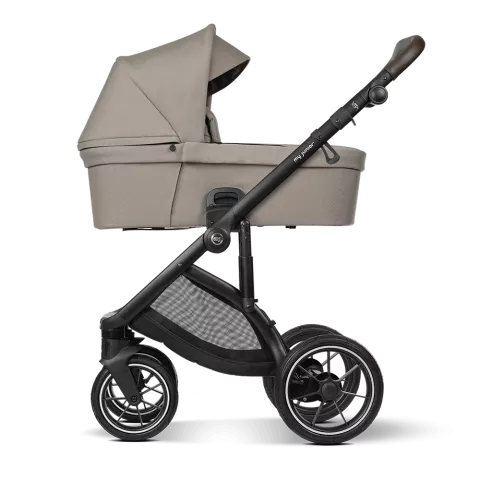
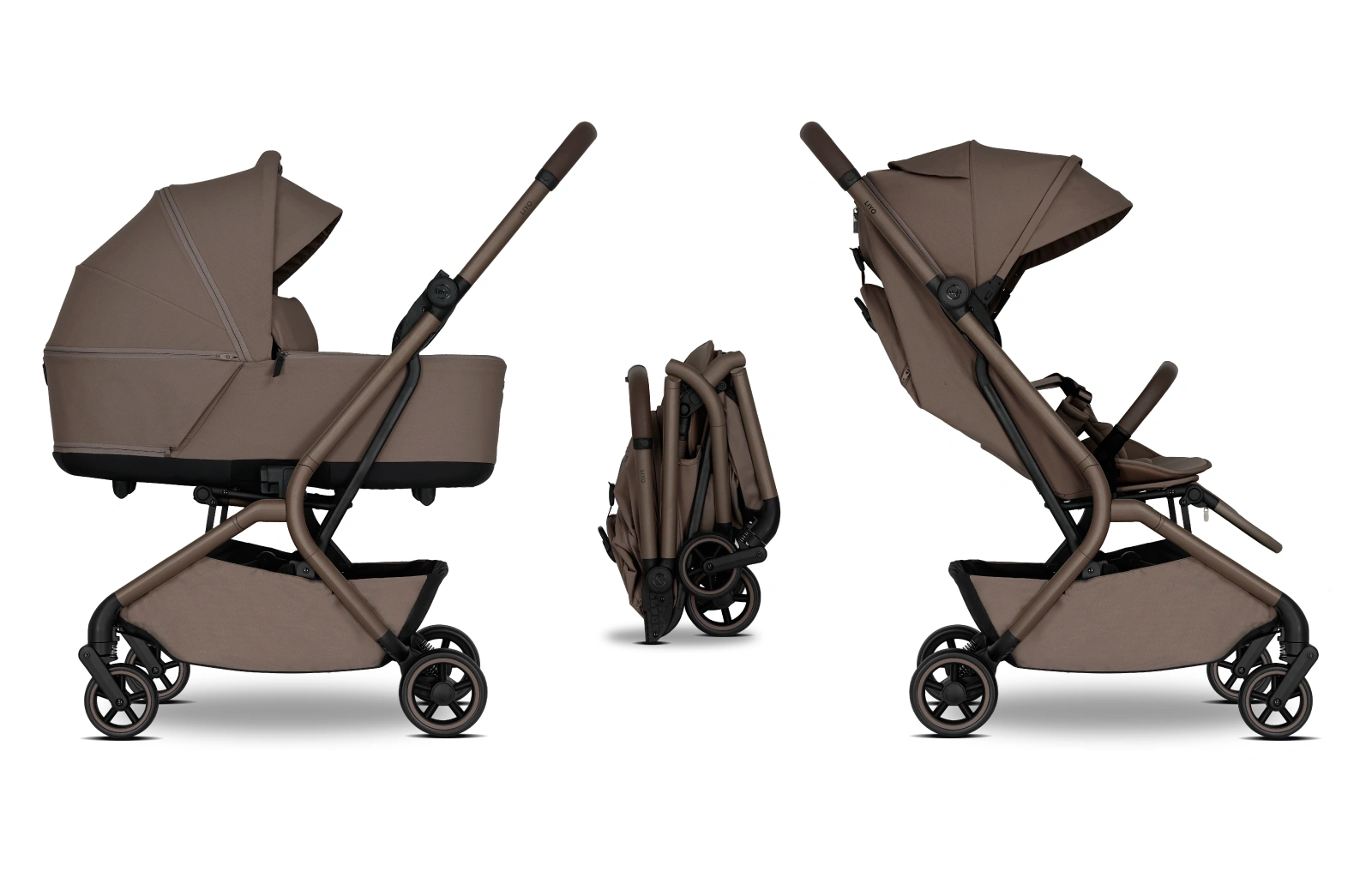
The my junior LIYO is the only pushchair in the world with IATA approval – and that as a complete system including carrycot. What this means in practice: for the first time, parents with newborns no longer have to choose between ‘Cabin Size’ and a carrycot. They can have both at the same time.
The patented EvoOne™ technology folds the pushchair and carrycot together as one system – without removing anything, without separate parts and without conversion. The result fits in the cabin. Naturally, the baby is taken out before folding.
my junior LIYO – The travel pushchair with a foldable carrycot that redefines everything
The world's only pushchair: cabin size + IATA approval + foldable carrycot in one system.
- ✓EvoOne™: pushchair and carrycot fold as one system – carrycot stays attached
- ✓IATA-approved: the world's only pushchair that can go on board with the carrycot attached
- ✓Genuine carrycot with a completely flat lying surface – suitable from birth
- ✓180° panoramic window, even in the lie-flat position
- ✓Memory buttons: remove and attach the carrycot in seconds
- ✓Removable carrycot cover for protection in all weather conditions
- ✓Integrated AllOver SunProtection sun canopy
- ✓XXL basket with a load capacity of up to 8 kg + additional storage compartments
- ✓Integrated shoulder strap
- ✓From birth up to 22 kg – one system for years
- ✓10-year warranty
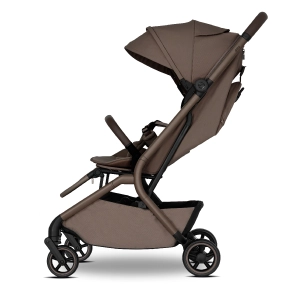
my junior PICO 3 with Carrycot – The Flexible Alternative
Fully equipped travel pushchair that becomes a newborn system with the optional carrycot.
- ✓Cabin Size: folded dimensions 54 × 44 × 25 cm, including carrycot
- ✓Foldable PICO carrycot: completely flat lie-flat surface from birth
- ✓AutoFold™: one-handed folding in seconds
- ✓UV50+ hood with XXL mesh panoramic window
- ✓Ventilated backrest system in the seat unit
- ✓5-point harness with magnetic buckle | Anti-fall protection
- ✓IGR ergonomics seal | 100% midwife recommendation
- ✓Carrycot can also be retrofitted separately as an accessory
- ✓10-year warranty
FAQ – Frequently Asked Questions about the Cabin-Size Buggy
Cabin Size means that, when folded, the buggy complies with an airline’s hand-luggage dimensions. It is not a protected term, as each airline defines its own dimensions. Therefore, never rely solely on the manufacturer’s Cabin Size claim; always check the exact folded dimensions in centimetres and compare them with your airline’s current requirements.
Cabin Size is a manufacturer’s specification without official verification. IATA-approved means that the buggy has been officially approved by the international umbrella organisation of airlines for carriage on board. This is the most reliable confirmation of genuine cabin suitability. The my junior LIYO is IATA-approved and is the only stroller in the world that can also be used with the carrycot attached.
That depends on the airline and the buggy. Most airlines require buggies to be checked in at the gate, even if they meet the size requirements. Only with the airline’s explicit permission and suitable dimensions can the buggy be placed in the overhead bin. With IATA approval, as with the LIYO, the chances of actually being allowed on board are significantly higher. Nevertheless, the rule remains: check with the airline in advance.
Ryanair and Wizz Air are considered particularly strict among European airlines. Under the standard fare, only a small bag measuring 40 × 20 × 25 cm is allowed free of charge. The Priority fare adds a 55 × 40 × 20 cm bag. easyJet also differentiates significantly between fares. Anyone wanting to be on the safe side should look for a folded size of no more than 55 × 40 × 20 cm.
Weight allowances vary depending on the airline. Lufthansa, Swiss, Austrian and Eurowings allow 8 kg of hand luggage. Ryanair and Wizz Air allow up to 10 kg with the Priority fare. British Airways is more generous, allowing 23 kg. Always check the weight of your buggy as part of your complete travel setup, i.e. with the wheels and without your child.
The my junior LIYO is IATA-approved and therefore officially authorised for use in the cabin. Although Ryanair and other airlines may not simply disregard this status, the specific conditions at the gate can vary. Confirm carriage with the airline in writing beforehand and print out the IATA approval. At 54 × 44 × 25 cm, the PICO 3 slightly exceeds Ryanair’s depth limit of 20 cm for the Priority fare. Gate-check is recommended here.
Discover more related content
Here you'll find relevant product pages, comparisons and services relating to cabin-size buggies, travel buggies and models for travelling.
my junior LIYO – IATA travel buggy (Cabin Size + carrycot)my junior LIYO pushchair (complete system)my junior PICO 3 – Compact cabin-size buggymy junior PICO 3 with carrycot – cabin-suitable from birthmy junior PICO 360 – 360° swivel wheelsAll buggies at a glanceBuggy comparison: Find your dream buggyWhich buggy is right for me? (Quiz)Try it free for 100 daysStores & Studios – experience buggies in person